Case Example 1 –
VIP Elevator Management Challenges
When VIPs use public elevators, building management must address security concerns, guest privacy, potential delays wasting guests’ precious time, and unnecessary intervention scenarios. Manual operation is highly resource-intensive, the drawback of this method exacerbated, especially when VIPs require access to multiple levels. On the other hand, assigned-person operation demands significant personnel coordination and becomes difficult to manage if VIP schedules change.
EMS Remote Car Control Solution
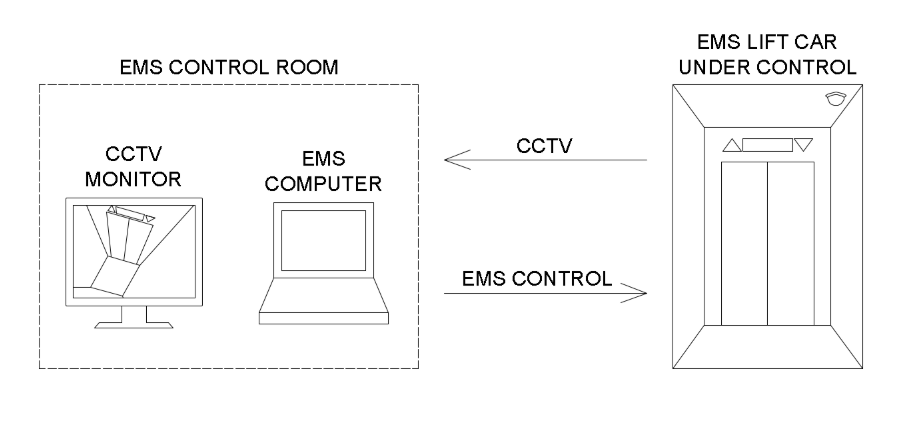
The EMS remote car operation features provide an efficient solution to these challenges. The EMS Car Control application enables security staff to receive VIP arrival notifications in the security room and monitor CCTV to identify an available elevator. This enables a free elevator to respond to hall calls except at the VIP’s floor level. Security staff is able to remotely control the elevator to the designated floor once the VIP boards, and restore the elevator to Normal Operating Mode after the VIP exits. This streamlined approach eliminates manual coordination while maintaining security and privacy.
Case example 2 –
Elevator Access Control for Building Management
Commercial buildings always install elevator IC card system as part of their integrated access control management system. However, access restrictions may only be required during office hours. Manually activating and deactivating the IC card system periodically may increase building management workload.
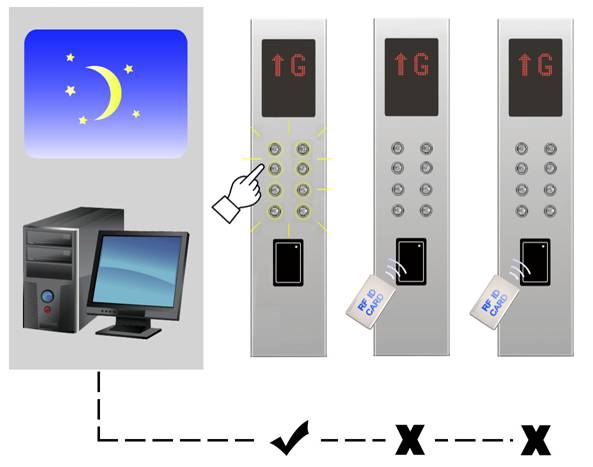
The EMS system offers an automatic IC card mode for elevator access control, with a 7-day, 24- hour schedule for activation and deactivation, including during public holidays. It also provides the following features:
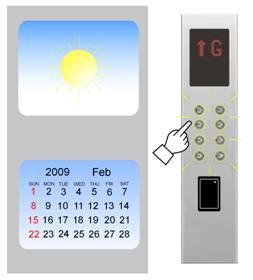
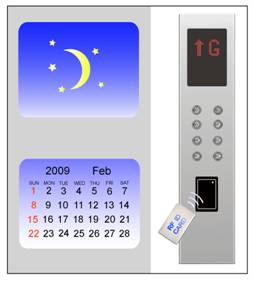
EMS is a flexible system that can be adjusted for special events.
Case example 3 –
Automatic Scheduled Operation
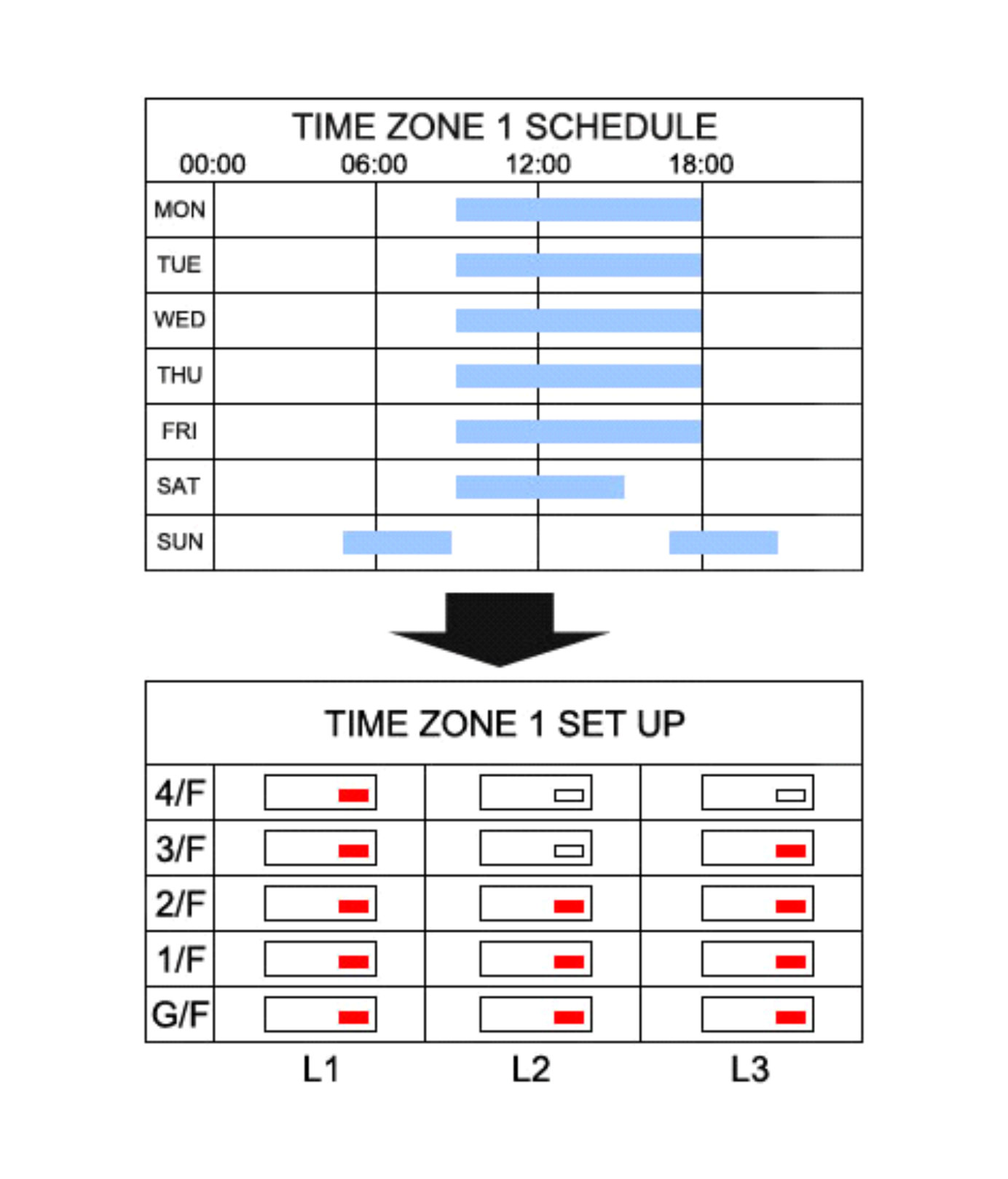
Specific lift operation time that may vary depending on special events, holidays and VIP visits. Manually managing these operational changes consumes significant manpower. Furthermore, configuring different settings for each floor increases the complexity of the task.
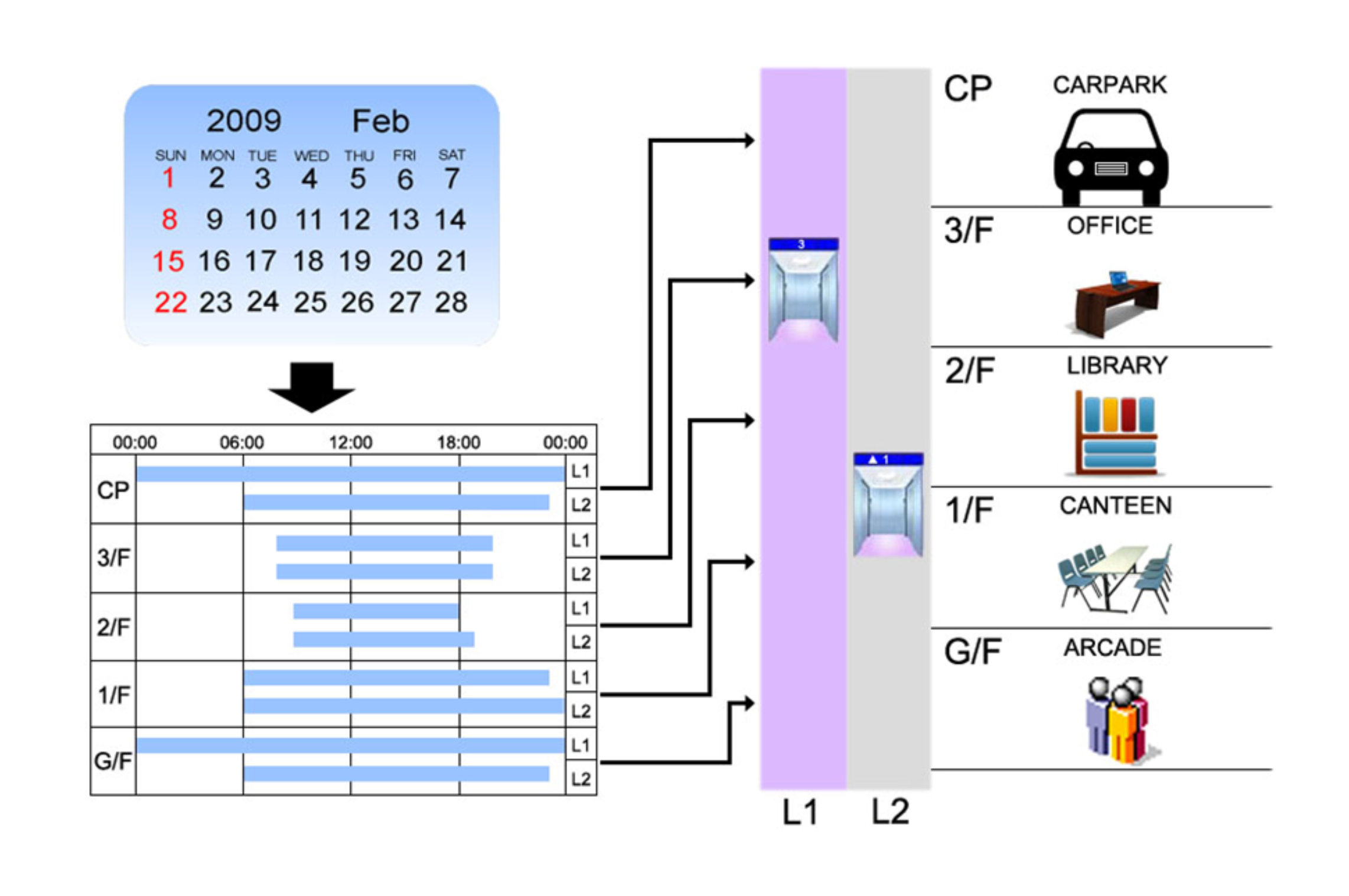
The EMS provides a scheduled operation feature that flexibly controls floor access. Each floor can assigned different time schedules, configurable 24 hours a day, 7 days a week. In the event of special occasions, settings can be temporarily overridden until the event concludes. All adjustments can be made via the centralized computer, eliminating the need for on-site manual intervention.
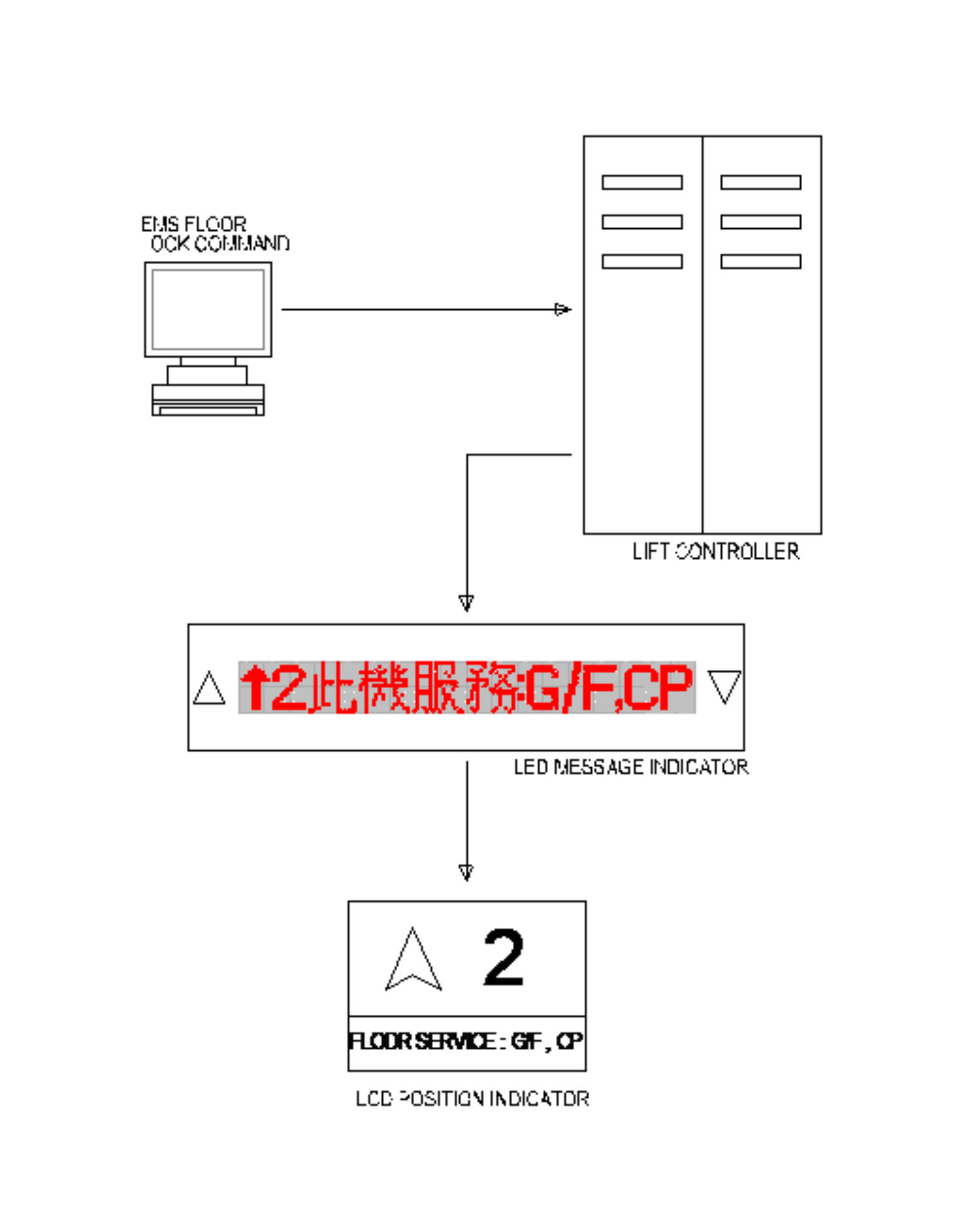
Additionally, the EMS can integrate with LED/LCD indicators to display current floor service status, ensuring a more user-friendly experience.
These features are suitable for:
Case example 4 –
Passenger Flow Management
Modern building management aims to provide better service. As the main access point for building entry and exit, elevators must respond quickly and arrive at the destination floor on time. Improving elevator efficiency is therefore an important consideration in modern buildings.
The EMS provides passenger flow management features, including peak period dispersal, event and holiday scheduling, and exclusive tenant service.
Peak Period Dispersal
- Efficiently handling high passenger volumes during morning, lunch, and evening peaks in commercial buildings.
Event and Holiday Scheduling
- Managing crowd flow via mall lifts during large-scale exhibitions or holiday periods.
Exclusive Tenant Service
- Allocating dedicated elevator service for major tenants (e.g., mobile repair centers) during specific time slots.
To address carrying time periods and traffic conditions, the EMS supports multiple operating modes with automatic switching capabilities.
Up-Peak Mode:
- Configuring the lift group to prioritize upward hall calls, or even exclusively respond to calls from the main lobby.
Down-Peak Mode:
- Configuring the lift group to prioritize downward hall calls to handle large numbers of occupants leaving the building.
Group Control or Independent Operation:
- Assigning specific lift to serve designated floors or provides independent service for VIP or specialized requirements.
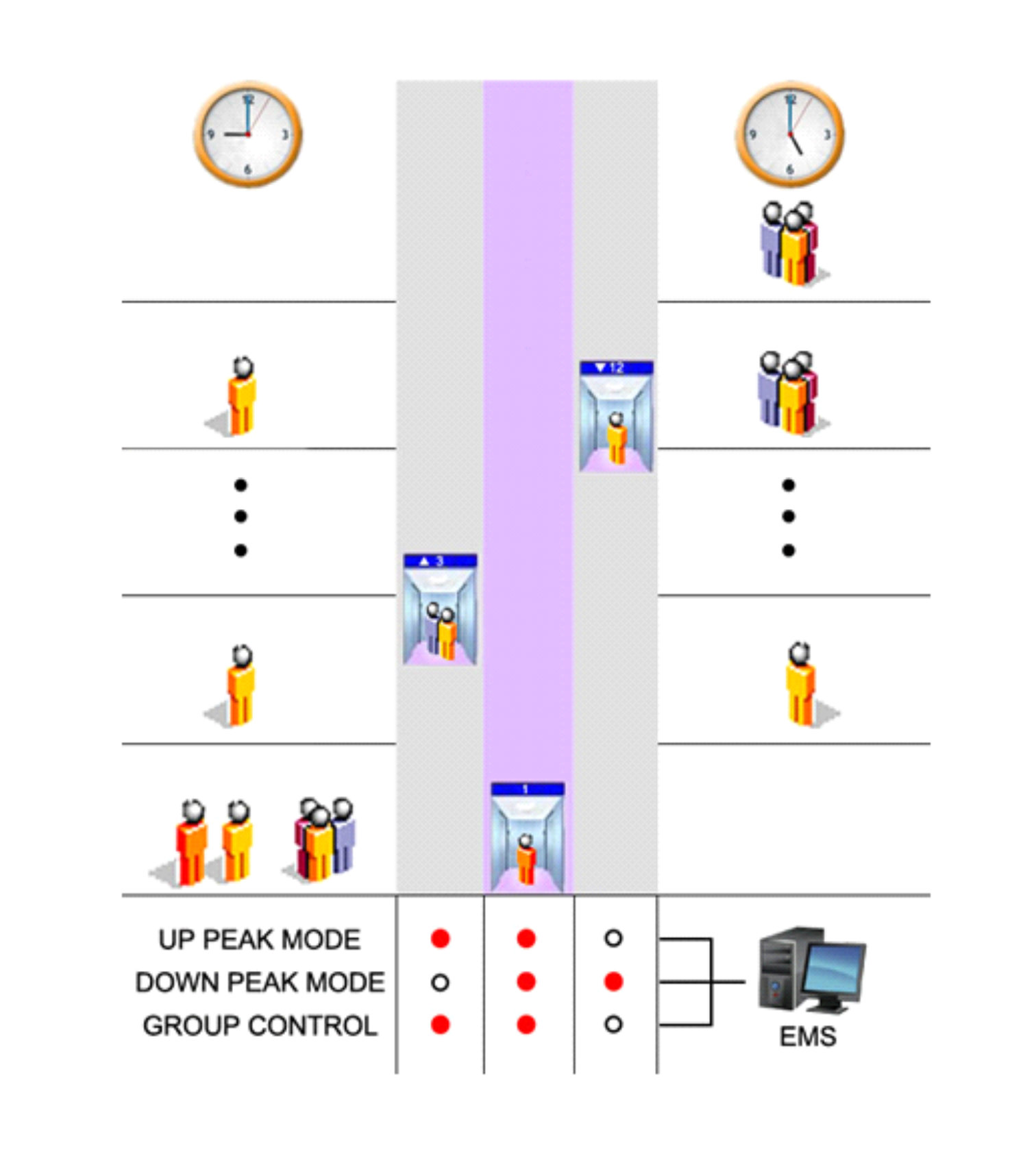
Through these configurations, different modes are used based on crowd density. Floors with high congestion receive increased lift service, while lower traffic floors maintain standard response times. This balances the overall building load and achieves effective passenger flow control.
24/7 Scheduling
- Supports granular time‑slot settings for every hour of the day and every day of the week.
Exception Management
- Customizable settings for public holidays or special events.
Manual Override
- Allows instant switching to manual mode for flexible deployment during unexpected scenarios.
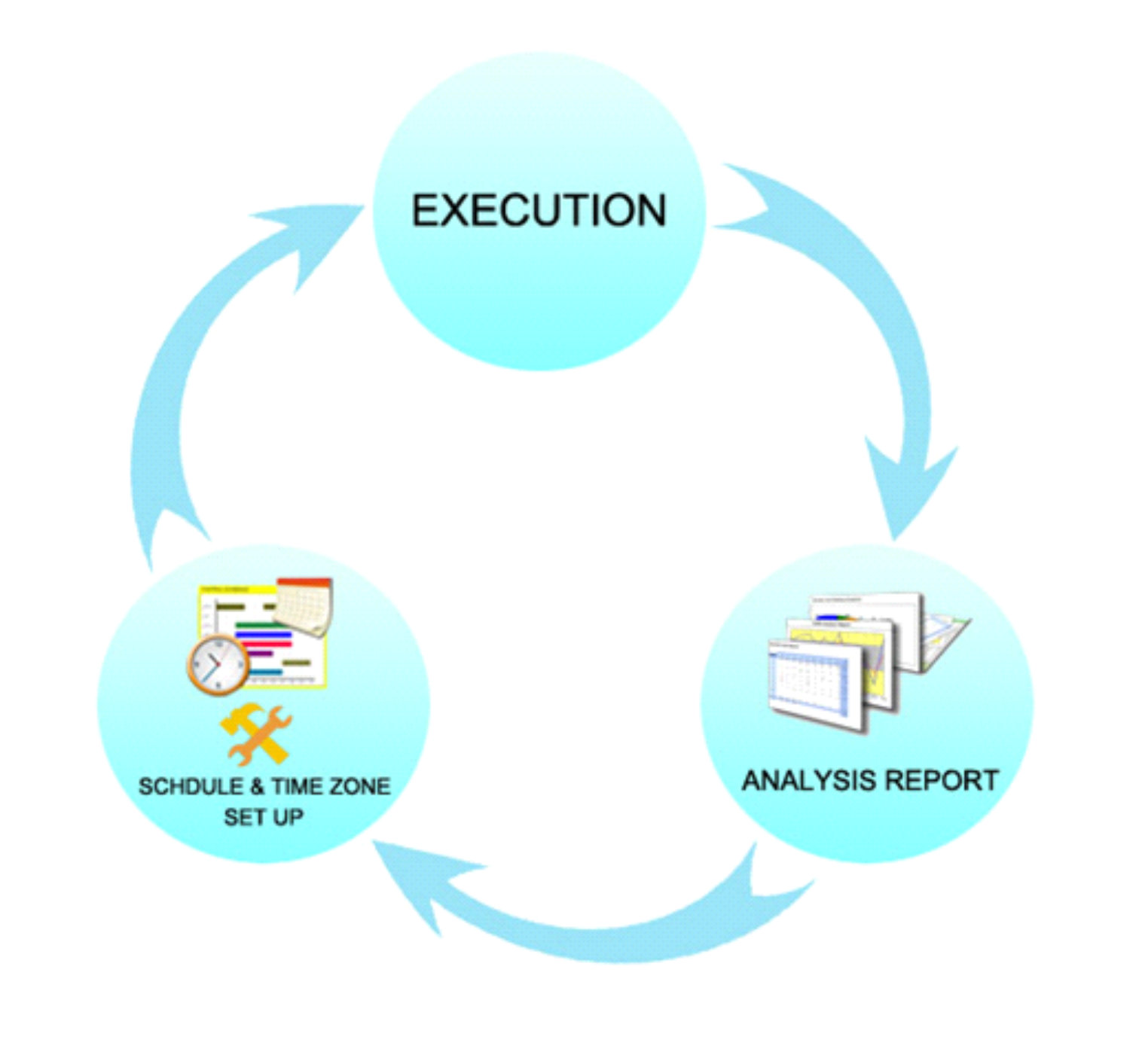
Data Analytics & Continuous Improvement
- The EMS records comprehensive operational data and analyzes landing call response times across different floors. The system automatically generates analytical reports, enabling property management to make data‑driven adjustments. This ensures continuous optimization of service levels to meet crowd management objectives.